
If Gnash keeps freezing, becoming unresponsive, or closing unexpectedly, the problem can quickly turn a productive session into a frustrating one. A freeze can happen while opening a project, moving objects, switching between views, or performing a demanding operation.
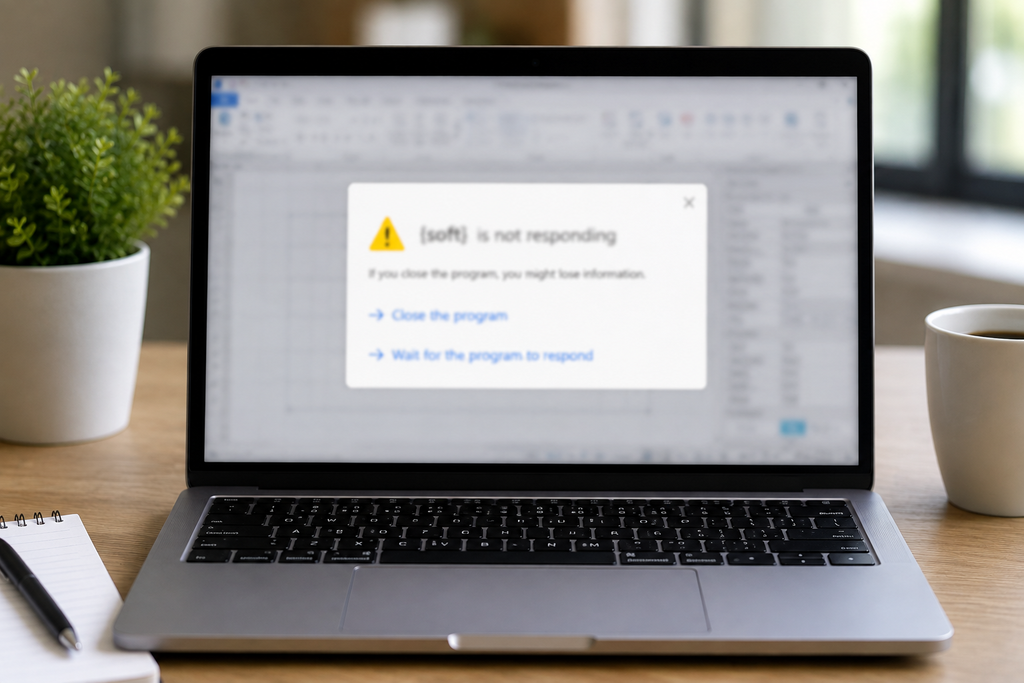
The good news is that a frozen or crashing installation does not necessarily mean you need to reinstall everything. Driver problems, outdated system components, graphics settings, damaged files, antivirus interference, and limited system resources can all contribute to instability.
In this guide, I’ll walk you through 7 practical ways to troubleshoot Gnash when it keeps freezing or crashing. Start with the simpler fixes and move toward the more advanced ones if the problem continues.
Why Does Gnash Keep Freezing or Crashing?
There isn’t always a single cause behind repeated freezes. In many cases, the problem comes from an interaction between the software, Windows, graphics hardware, drivers, or a particular project file.
Common causes include:
- An outdated Gnash installation
- Outdated or incompatible graphics drivers
- Problems with hardware acceleration
- Corrupted project or configuration files
- Antivirus or security software interference
- Damaged Windows components
- Missing or damaged runtime components
- Insufficient system resources
- Network or file-access problems
- A damaged Gnash installation
Before making major changes, try closing unnecessary applications and restarting the computer. If Gnash continues to freeze afterward, work through the solutions below.
1. Turn Off Hardware Acceleration
Hardware acceleration can improve graphics performance, but it can also create stability problems on some systems. A problematic graphics driver, incompatible GPU configuration, or multiple graphics adapters can cause Gnash to become unresponsive.
If Gnash frequently freezes while displaying drawings, changing views, opening files, or moving objects, disabling hardware acceleration is a useful test.
How to disable hardware acceleration
Step 1: Press Ctrl + Shift + Esc to open Windows Task Manager.
Step 2: Find the Gnash process in the running applications or processes list and end the task if the program is completely unresponsive.
Step 3: Start Gnash again.
Step 4: Open the application’s Options or settings menu and look for the System, Display, or graphics-performance section.
Step 5: Locate the Hardware Acceleration setting and turn it off.
Step 6: Save the change and restart Gnash.
Use the program normally for a while afterward. If the freezing stops, graphics acceleration or the associated driver may have been contributing to the problem.
Quick tip: If disabling hardware acceleration fixes the problem, don’t immediately assume the graphics card itself is defective. Updating the GPU driver may allow you to turn the feature back on later.
2. Update Gnash to the Latest Available Version
Running an older version can leave your installation exposed to bugs that have already been fixed in later updates.
Software updates commonly include stability improvements, compatibility fixes, and performance changes. That’s why updating Gnash should be one of the first things you try when the application repeatedly stops responding.
How to check for updates
Step 1: Sign in to the official account or software-management portal associated with Gnash.
Step 2: Open the section containing your installed products or applications.
Step 3: Look for available updates for your current version.
Step 4: Download and install the appropriate update.
Step 5: Restart your computer if the installer requests it.
Then launch Gnash and test the same task that previously caused the freeze.
If the problem started immediately after a recent update, however, the newest version may not necessarily be the cause. In that situation, check the developer’s release notes or support documentation for known issues before making further changes.
3. Install the Latest Windows Updates
Your operating system plays a major role in application stability. An outdated Windows installation can contain compatibility problems that affect graphics drivers, system libraries, security components, and other software dependencies.
Keeping Windows updated can therefore resolve problems that appear to be caused by Gnash but actually originate elsewhere.
Windows 11
- Open Start.
- Select Settings.
- Choose Windows Update.
- Click Check for updates.
- Install any available updates.
- Restart the computer when prompted.
Windows 10
- Open Start.
- Go to Settings.
- Select Update & Security.
- Open Windows Update.
- Click Check for updates.
- Install the available updates and restart Windows.
After restarting, open Gnash again and check whether the freezing has stopped.
If Windows reports that everything is already up to date, move on to the next solution.
4. Update the Graphics Driver or Select the Correct GPU
Graphics-related problems are particularly important when Gnash performs intensive 2D or 3D work.
A damaged, outdated, or incompatible display driver can cause application crashes, screen glitches, freezes, or poor performance. This becomes even more important on laptops and desktops equipped with both integrated and dedicated graphics.
Update the graphics driver through Device Manager
Step 1: Open the Windows Start menu and search for Device Manager.
Step 2: Expand Display adapters.
Step 3: Right-click your graphics adapter.
Step 4: Select Update driver.
Step 5: Choose the option that allows Windows to search for an available driver.
If Windows doesn’t find a newer driver, check the graphics manufacturer’s official website for the latest driver compatible with your GPU and Windows version.
Make sure Gnash uses the appropriate GPU
On a system with multiple graphics processors, Windows may not always use the GPU you expect.
Step 1: Open Settings.
Step 2: Go to System > Display > Graphics.
Step 3: Add Gnash to the application list if it isn’t already there.
Step 4: Open the application’s graphics options.
Step 5: Select High performance if your system has a dedicated GPU and you want Gnash to use it.
Restart the application after changing the graphics preference.
5. Check Whether Antivirus Software Is Interfering
Security software continuously scans files and processes running on your computer. In some situations, this monitoring can interfere with applications that constantly read and write large numbers of files.
This can be especially noticeable when Gnash works with large projects, temporary files, libraries, plugins, or network locations.
Don’t leave your antivirus disabled
Temporarily disabling security protection can sometimes help determine whether antivirus software is involved, but it isn’t a good permanent solution. Leaving your computer unprotected increases security risks.
Instead, if you’ve confirmed that security software is involved, use its exclusions or allow-list settings to create carefully chosen exceptions.
Depending on your installation, potentially relevant locations can include:
- The main Gnash installation directory
- Shared application-data directories
- The program’s local configuration folder
- The program’s roaming profile folder
- Temporary working directories
- Project folders that are repeatedly scanned
The exact folders depend on the version and installation method of Gnash, so don’t blindly add large portions of your drive to the antivirus exclusion list.
Security warning: Only create exclusions for folders you trust. Avoid excluding your entire user profile, system drive, Downloads folder, or other broad locations.
6. Repair Windows Runtime and System Components
Sometimes the application itself isn’t the real problem. Supporting components used by Windows applications can become damaged or outdated, which may lead to crashes or unexpected behavior.
Depending on the version of Gnash, this can include components such as .NET Framework and Microsoft Visual C++ Redistributable packages.
Repair .NET-related problems
On modern versions of Windows, .NET components are generally managed as Windows features or installed runtime components rather than being manually removed like ordinary applications.
Start by installing all pending Windows updates.
You can also use Microsoft’s official .NET Framework Repair Tool when you’re troubleshooting a suspected .NET Framework problem.
After repairing the component, restart Windows and test Gnash again.
Check Windows system files
Windows also includes the System File Checker utility.
Step 1: Search for Command Prompt from the Start menu.
Step 2: Right-click it and choose Run as administrator.
Step 3: Enter:
SFC /SCANNOW
Step 4: Allow the scan to finish.
If Windows reports that it repaired damaged system files, restart the computer before testing Gnash again.
Repair Visual C++ Redistributable
If the required Microsoft Visual C++ runtime is damaged, repairing or reinstalling the appropriate package can sometimes resolve application instability.
Use Microsoft’s official documentation to identify the correct supported Visual C++ Redistributable package rather than downloading runtime installers from unofficial websites.
7. Repair or Reinstall Gnash
If you’ve tried the previous fixes and Gnash continues to freeze, the installation itself may be damaged.
Repairing the installation is preferable to immediately removing the program because it may restore missing or corrupted files without requiring a complete setup from scratch.
Try repairing the installation first
Depending on the version of Gnash, the repair option may be available through Windows or the application’s own installer.
On Windows:
- Open Settings.
- Go to Apps.
- Find Gnash in the installed applications list.
- Open its available options.
- If a Repair option is available, select it.
- Follow the instructions shown on screen.
If no repair option is available, reinstalling Gnash may be necessary.
Before uninstalling, make sure important projects, templates, custom settings, plugins, libraries, and other personal files are backed up.
Important: Reinstalling an application should normally be one of the final troubleshooting steps, not the first one. A fresh installation won’t fix an underlying graphics-driver, Windows, hardware, or project-file problem.
What If Gnash Freezes Only With One Specific File?
If Gnash works normally with other projects but freezes whenever you open one particular file, the application itself may not be the main problem.
The file could be damaged, unusually large, contain problematic objects, or depend on an unavailable external resource.
Try these steps:
- Make a copy of the affected file before experimenting.
- Check whether other project files open normally.
- Move the file to a local drive if it is stored on a network location.
- Try opening the file using the application’s recovery tools, if available.
- Check for external references or missing resources.
- If possible, open an earlier backup or previous version of the project.
If only one file causes the crash while everything else works correctly, focus your troubleshooting on that file rather than repeatedly reinstalling Gnash.
What to Do When Gnash Freezes With Unsaved Work
A frozen application can be especially worrying when you’ve spent hours working on a project.
First, don’t immediately force-close it. Some operations can temporarily make an application appear frozen while the computer is still processing a large or complex task.
Give it a little time and check whether CPU, memory, or disk activity is still occurring.
If the application becomes responsive again, save the project immediately.
If it remains completely unresponsive and you have no way to recover the session, Windows Task Manager can be used to close the application.
Afterward, check whether Gnash has created an autosave, recovery, backup, or temporary version of your project.
The exact location and file format of these recovery files depend on the version and configuration of Gnash, so check the application’s official documentation for the appropriate recovery procedure.
How to Prevent Gnash From Freezing Again
Fixing the current crash is only half the job. A few maintenance habits can reduce the chances of seeing the same problem again.
Keep the application updated
Install stable updates when they become available, especially releases that address known crashes or compatibility problems.
Keep graphics drivers current
Graphics-intensive applications depend heavily on GPU drivers. Check for driver updates periodically.
Don’t overload the computer
Close applications you don’t need when working on large projects. This is particularly important when your system has limited RAM.
Keep enough free storage space
Windows and many professional applications need temporary disk space for caches, recovery files, and other operations. A nearly full system drive can cause unexpected performance problems.
Save projects regularly
Don’t rely entirely on automatic recovery. Save important work manually and maintain separate backups for projects you cannot afford to lose.
Be careful with plugins and add-ons
If freezing started after installing a plugin, extension, custom tool, or third-party component, temporarily disabling that component can help identify the source.
Test problematic files locally
If a project is stored on a network drive, cloud-synced folder, external drive, or remote location, try working with a local copy. Connection interruptions or file-access delays can sometimes look like an application freeze.
Frequently Asked Questions
Why does Gnash keep saying Not Responding?
A “Not Responding” message can appear when Gnash is busy processing a demanding operation, but repeated freezes can also be caused by graphics drivers, corrupted files, insufficient resources, Windows problems, plugins, or installation issues.
Start by waiting briefly to determine whether the program recovers. If the problem happens repeatedly, work through the troubleshooting methods in this guide.
Why does Gnash freeze when opening a file?
If only one file causes the problem, the file itself may be damaged or unusually complex. If every file produces the same behavior, investigate graphics drivers, hardware acceleration, system resources, Windows updates, and the application installation.
Moving a project from a network location to a local drive is also worth testing if the problem happens during file loading.
Can outdated graphics drivers make Gnash crash?
Yes. Graphics-intensive applications rely heavily on the display driver, and compatibility problems can cause instability. Updating the driver—or testing a different driver version when a problem started after an update—can help identify graphics-related issues.
Should I reinstall Gnash if it keeps crashing?
Not necessarily.
Reinstallation can fix damaged program files, but it won’t solve every cause of crashing. If the real problem is a GPU driver, Windows component, antivirus conflict, insufficient memory, or a damaged project, reinstalling the application may not change anything.
Try the less disruptive fixes first.
Why does Gnash work on small projects but freeze on large ones?
Large projects place greater demands on CPU, RAM, GPU, storage, and sometimes network resources. A system that handles simple files without difficulty may become unstable when a project contains many objects, textures, references, or other complex elements.
Closing background applications, updating the graphics driver, freeing storage space, and checking available system memory can help.
Final Thoughts
When Gnash freezes or crashes repeatedly, don’t assume that reinstalling the software is the only answer. In many cases, the cause is something around the application—such as a graphics driver, Windows component, hardware-acceleration setting, security program, project file, or limited system resources.
The seven fixes above give you a sensible troubleshooting path:
- Disable hardware acceleration.
- Update Gnash.
- Install Windows updates.
- Update or change the graphics driver.
- Check antivirus interference.
- Repair Windows runtime and system components.
- Repair or reinstall Gnash.
If one solution doesn’t work, move to the next rather than making several major changes at once. That makes it easier to identify what actually fixed the problem.
At FixItEarth, we focus on practical technology troubleshooting and straightforward solutions that help users get their software and devices working again without unnecessary complications.
